Voice AIRead Article
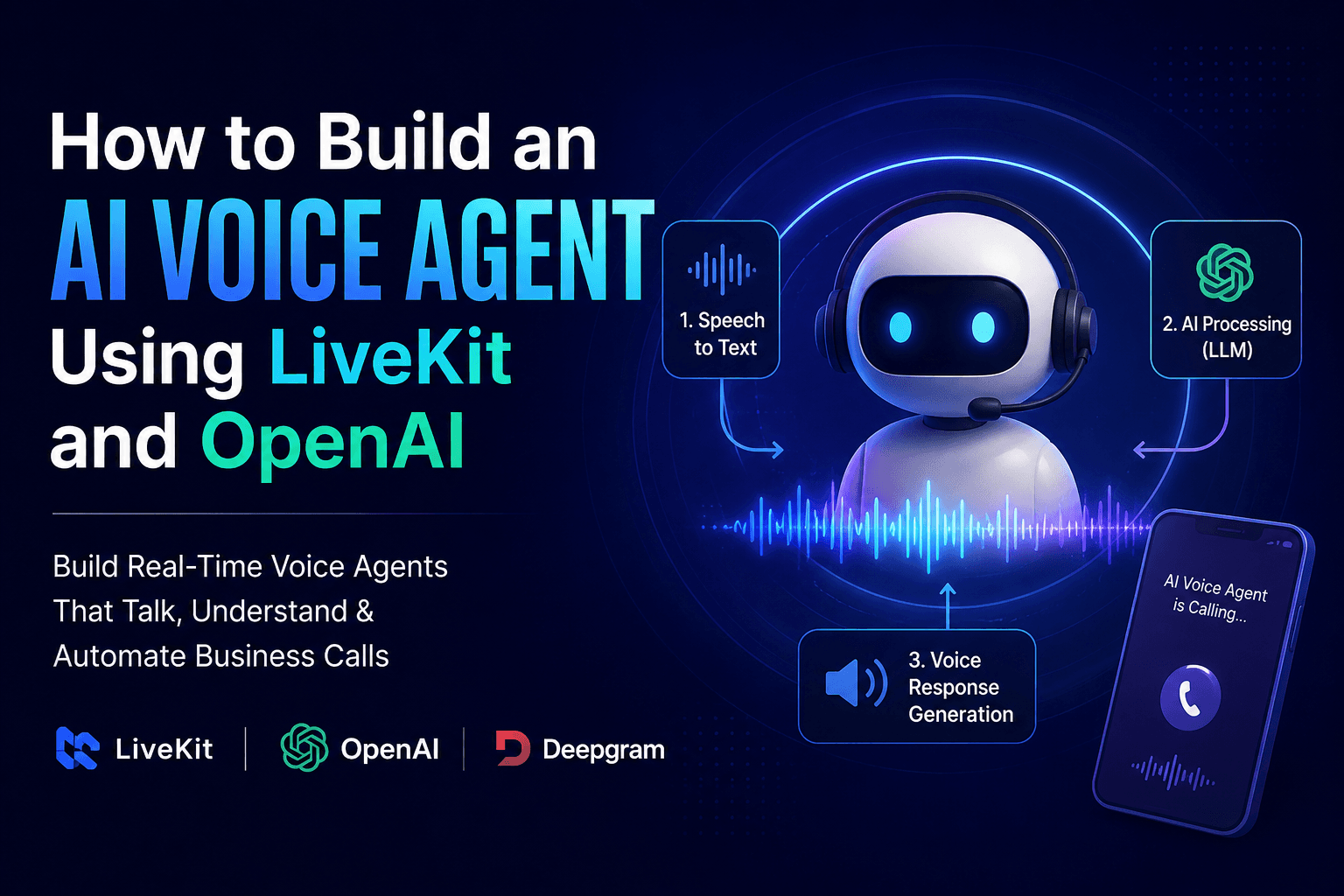
How to Build an AI Voice Agent Using LiveKit and OpenAI
Learn how AI voice agents automate business calls using modern AI tools.
July 2, 2026
8 min read
Everything a builder needs to know about Deepgram's STT models — Nova-3, Flux, pricing structure, accuracy tradeoffs, and how to actually integrate it into a voice AI product.
Written by
Akash Maurya
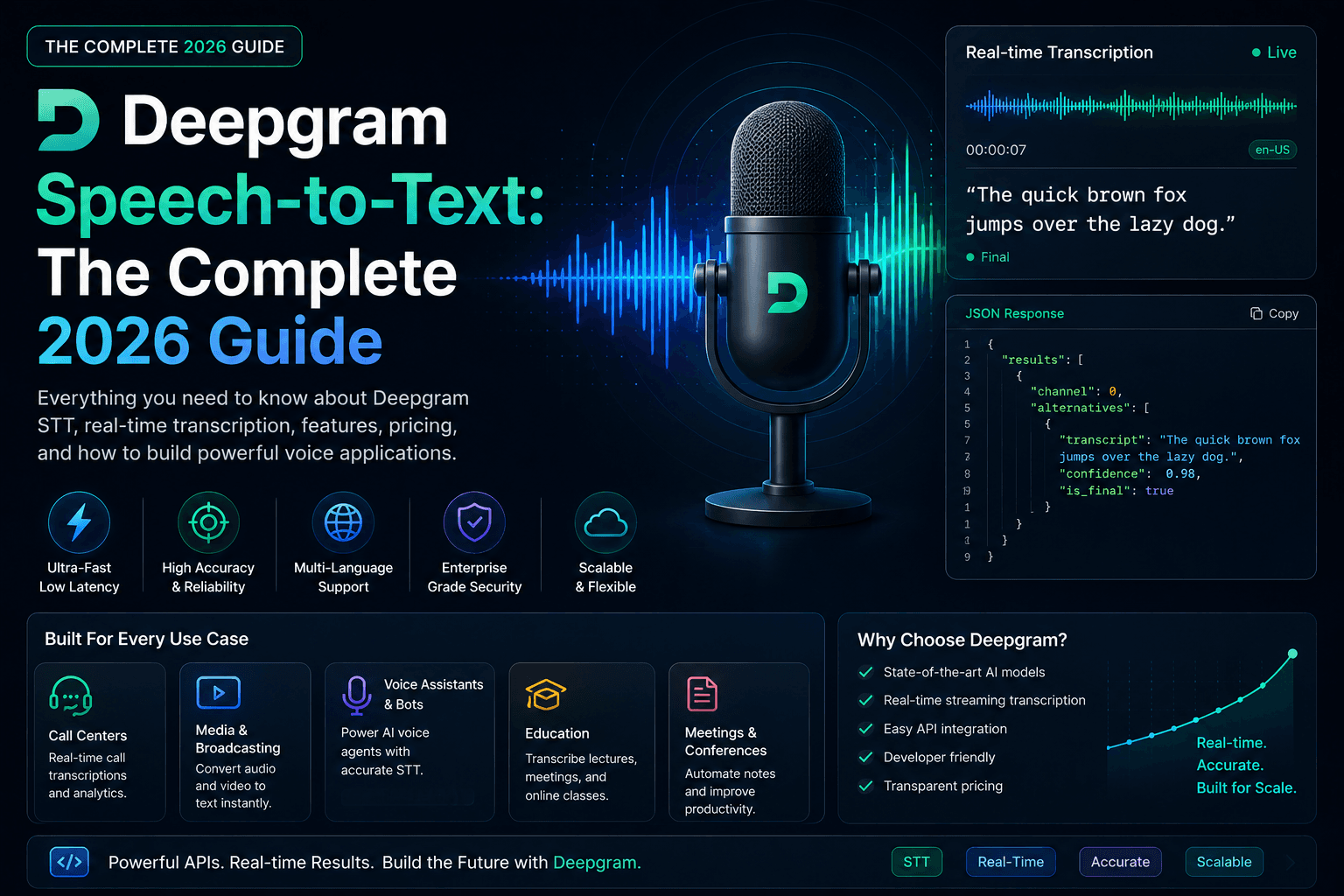
Deepgram is the default STT choice for most voice AI builders in 2026, and for good reason — but 'default choice' doesn't mean 'the right choice for every use case.' This guide covers when Deepgram is genuinely the best option, when a competitor makes more sense, and how to avoid the pricing surprises that catch teams off guard once diarization, redaction, and multilingual add-ons stack up.
This guide breaks down Deepgram's model lineup, real per-minute pricing (not just the headline number), streaming vs batch tradeoffs, and the integration patterns that actually matter when you're building a production voice agent rather than a transcription demo.
Nova-3 is Deepgram's flagship general-purpose model — strong accuracy across 50+ languages, available in both streaming and pre-recorded modes. Flux is a newer, more specialized model built specifically around the hardest problem in live voice agents: knowing when someone has actually finished speaking versus just paused. If you're transcribing recordings after the fact, Nova-3 is the right (and cheaper) choice. If you're building a live conversational agent where turn-taking quality directly affects how natural the conversation feels, Flux is worth the roughly 40-70% price premium.
| Model | Best For | Approx. Streaming Rate | Languages |
|---|---|---|---|
| Nova-3 Monolingual | General transcription, single language | $0.0077/min | English-optimized |
| Nova-3 Multilingual | Mixed-language or unpredictable-language audio | Higher than monolingual | 50+ languages |
| Flux English | Live voice agents needing precise turn detection | $0.0065/min | English |
| Flux Multilingual | Live multilingual voice agents | $0.0078/min | Multiple |
A surprising number of teams default to streaming transcription even for workloads that don't need it — like overnight call-recording analysis — and pay roughly 1.5-2x more per minute for latency they're not using. If your use case can tolerate even a few minutes of delay (QA review, analytics, compliance archiving), batch/pre-recorded transcription is meaningfully cheaper and often more accurate, since the model can use full audio context rather than processing in small real-time chunks.
Pro Tip
Rule of thumb: if a human is waiting on the transcript in real time (a live voice agent, a live captioning feature), use streaming. If the transcript is consumed later (QA, analytics, search), use batch and save 30-50% on that line item.
The advertised $0.0077/min (Pay-As-You-Go, Nova-3 streaming) or $0.0043/min (pre-recorded) is only the base transcription cost. Diarization (speaker identification), PII redaction, and multichannel audio (common in call-center recordings, where each side of the call is a separate channel) all add cost on top.
| Add-on | Impact on Cost |
|---|---|
| Multichannel audio (e.g., stereo call recording) | Cost multiplies by number of channels |
| Speaker diarization | Additional per-minute charge, not included in base rate |
| PII redaction | Additional per-minute charge |
| Audio Intelligence (summarization, sentiment) | Separate per-token pricing (~$0.0003-0.0006/1K tokens) |
| Provider | Approx. Rate (batch) | Strength | Weakness |
|---|---|---|---|
| Deepgram Nova-3 | $0.0043/min | Best real-time latency, per-second billing | Not the cheapest raw batch rate |
| AssemblyAI | $0.0025/min | Cheapest batch rate, strong on noisy audio, built-in summarization | Higher real-time pricing |
| OpenAI Whisper API | $0.006/min | Open-source option available, wide language coverage | Batch-only, no streaming or diarization |
| Google Cloud STT | $0.012-0.02/min | Deep GCP ecosystem integration | More expensive, rounding-based billing |
No — billing is based on actual audio duration processed, and Deepgram bills per second rather than rounding up, which reduces cost on short clips compared to competitors that round to 15-second increments.
Deepgram's multilingual coverage is broad but not India-specialized. For Hindi, Hinglish, and other Indian-language-heavy use cases, a purpose-built model like Sarvam AI's Saaras often performs better on code-switching and regional accents.
Using Flux English streaming at $0.0065/min, base STT cost alone is roughly $65/month — before diarization or any add-ons, and before your LLM, TTS, and telephony costs.
Speech-to-text is the first link in any voice AI pipeline, and its latency and accuracy set a ceiling for everything downstream — a slow or inaccurate STT model makes even the best LLM and TTS feel broken. At the same time, STT pricing pages are notoriously confusing, mixing per-minute, per-hour, and per-second billing with add-on fees that aren't in the headline rate.
Deepgram offers purpose-built models for different needs — Nova-3 for general-purpose high-accuracy transcription, and Flux specifically engineered for the turn-taking problem in live voice agents — with per-second billing that avoids the rounding overhead of competitors, and a genuinely generous free tier for evaluation before committing budget.
Written by Akash Maurya.
Published on July 15, 2026 • Updated on July 15, 2026
Learn how AI voice agents automate business calls using modern AI tools.
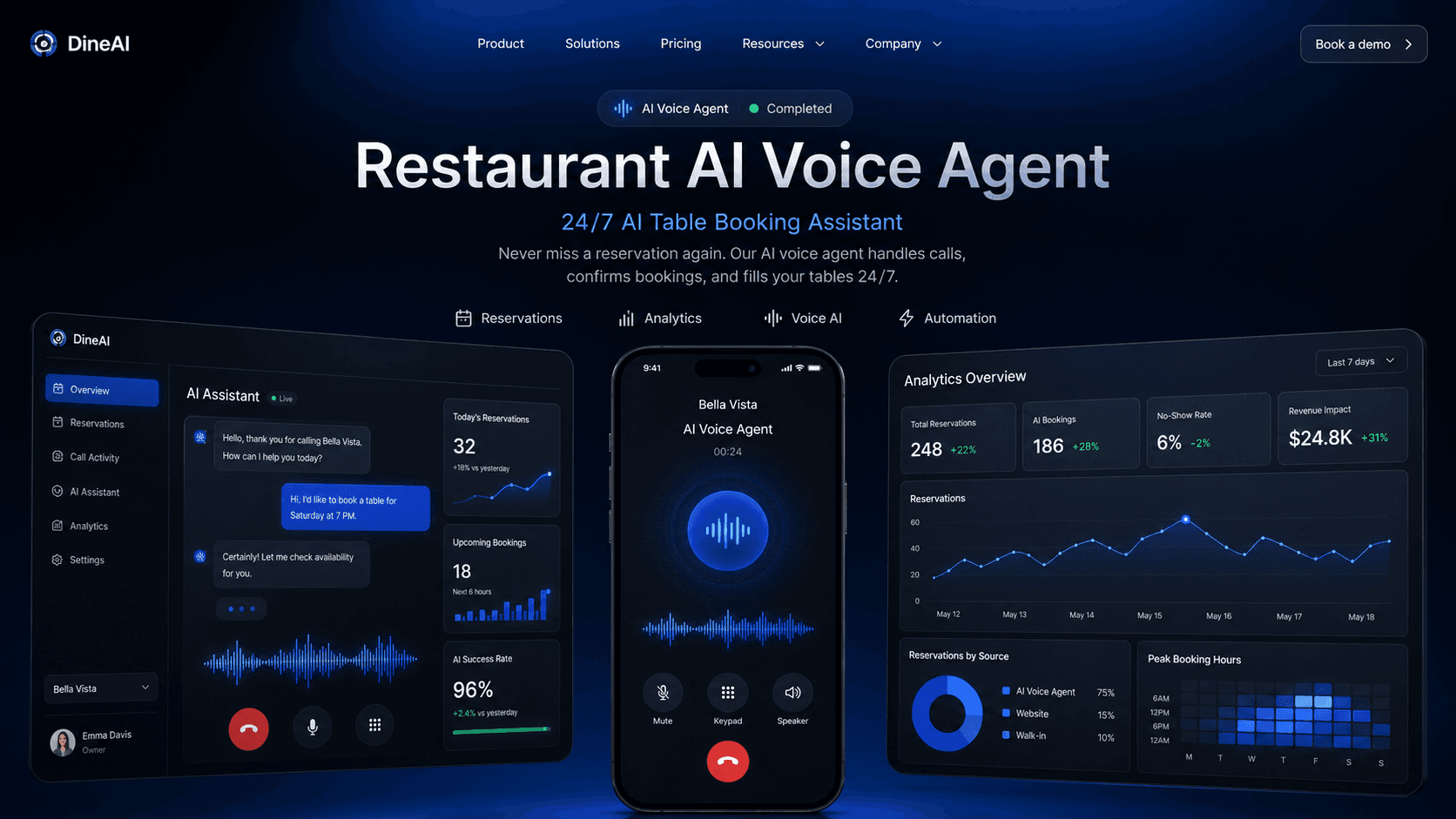
A senior engineer's field guide to deploying AI phone agents that take reservations, answer menu questions, and stop restaurants from losing money on missed calls.
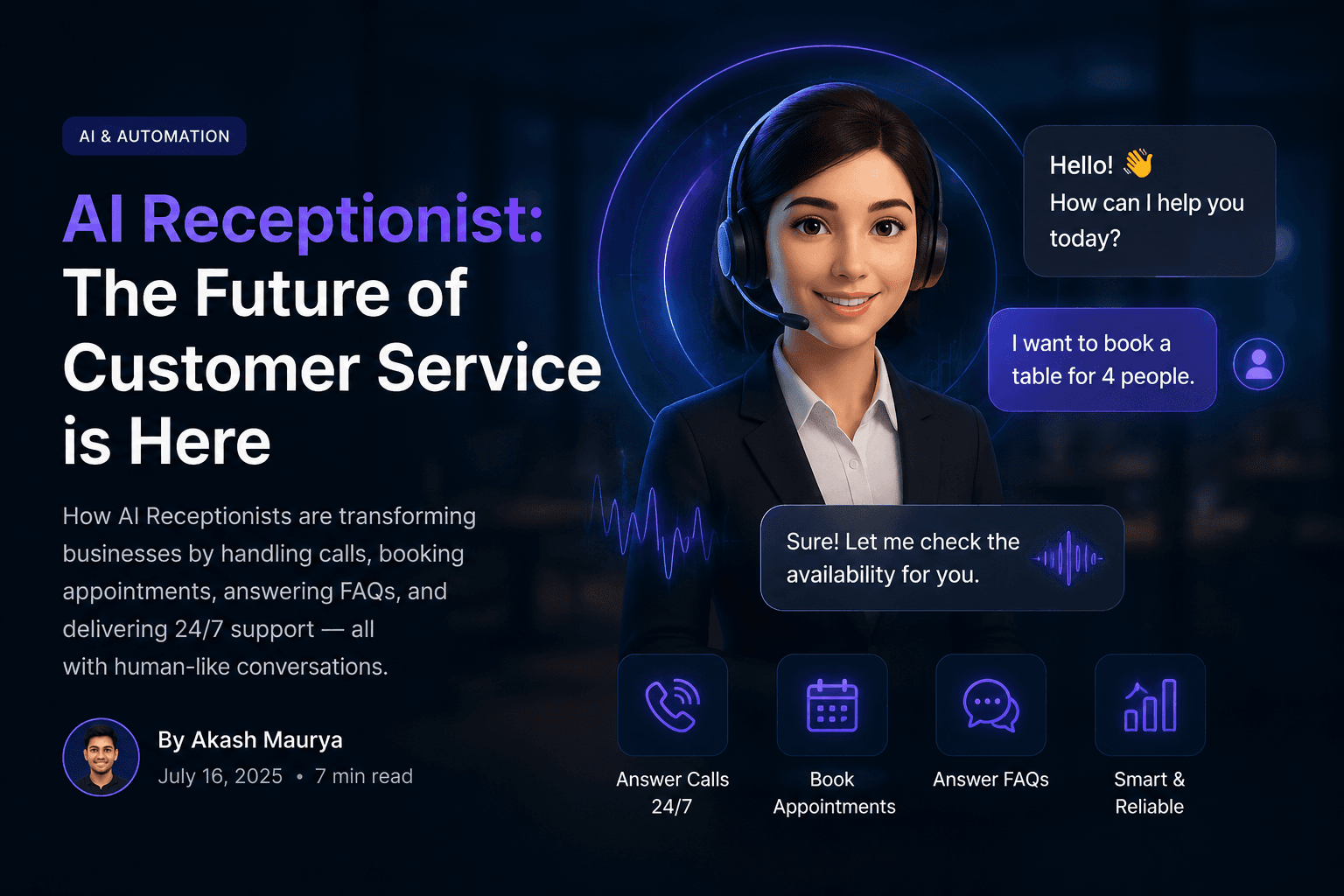
A practical look at how AI receptionists work, where they genuinely outperform humans, where they don't, and how to deploy one without breaking the guest or customer experience.
I build modern AI Voice Agents, SaaS platforms, automation systems, and full-stack applications that help businesses automate operations and improve customer experiences.