Voice AIRead Article
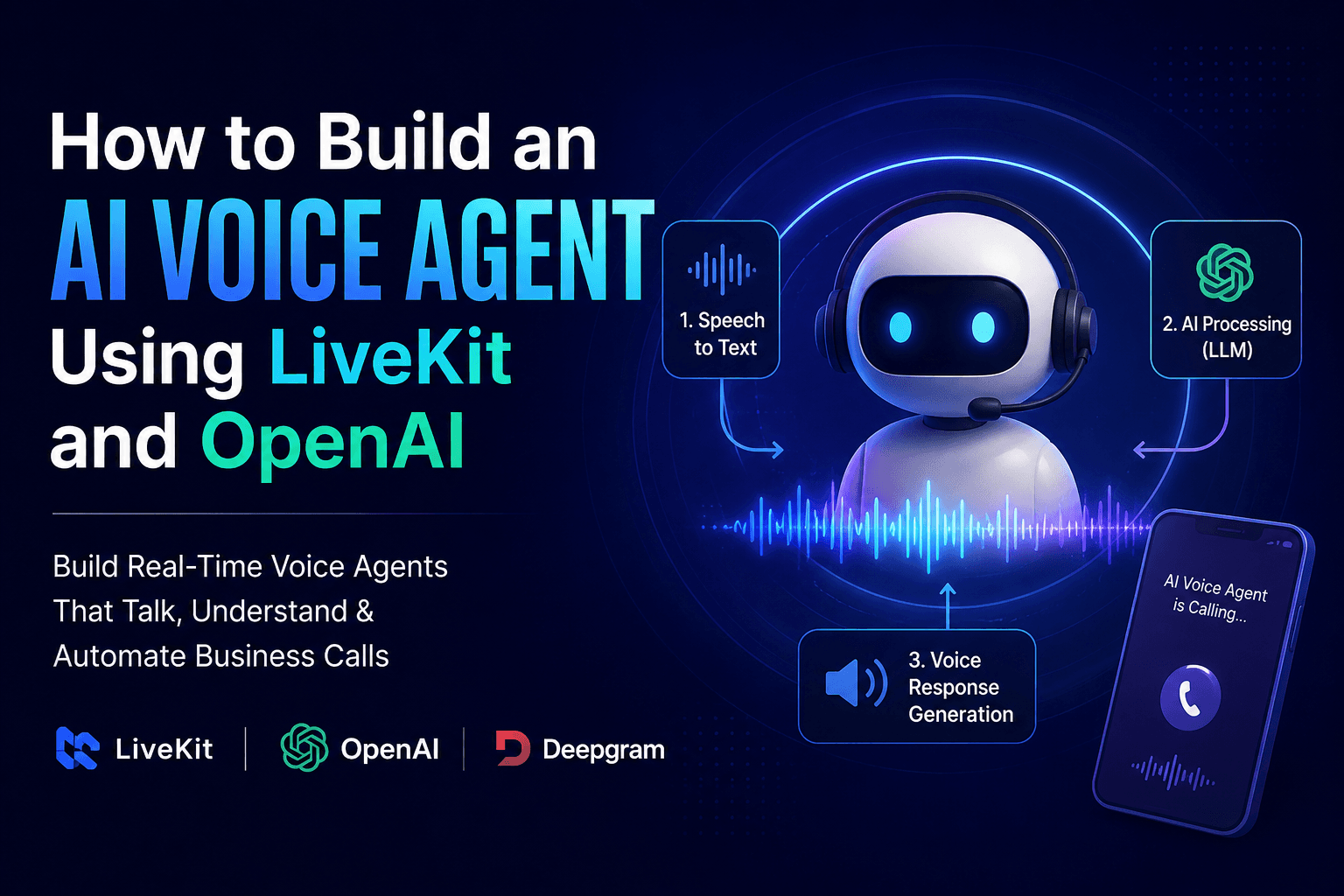
How to Build an AI Voice Agent Using LiveKit and OpenAI
Learn how AI voice agents automate business calls using modern AI tools.
July 2, 2026
8 min read
Everything a business needs to know before automating inbound or outbound calls with AI — architecture, platform choices, cost modeling, compliance, and what actually breaks in production.
Written by
Akash Maurya
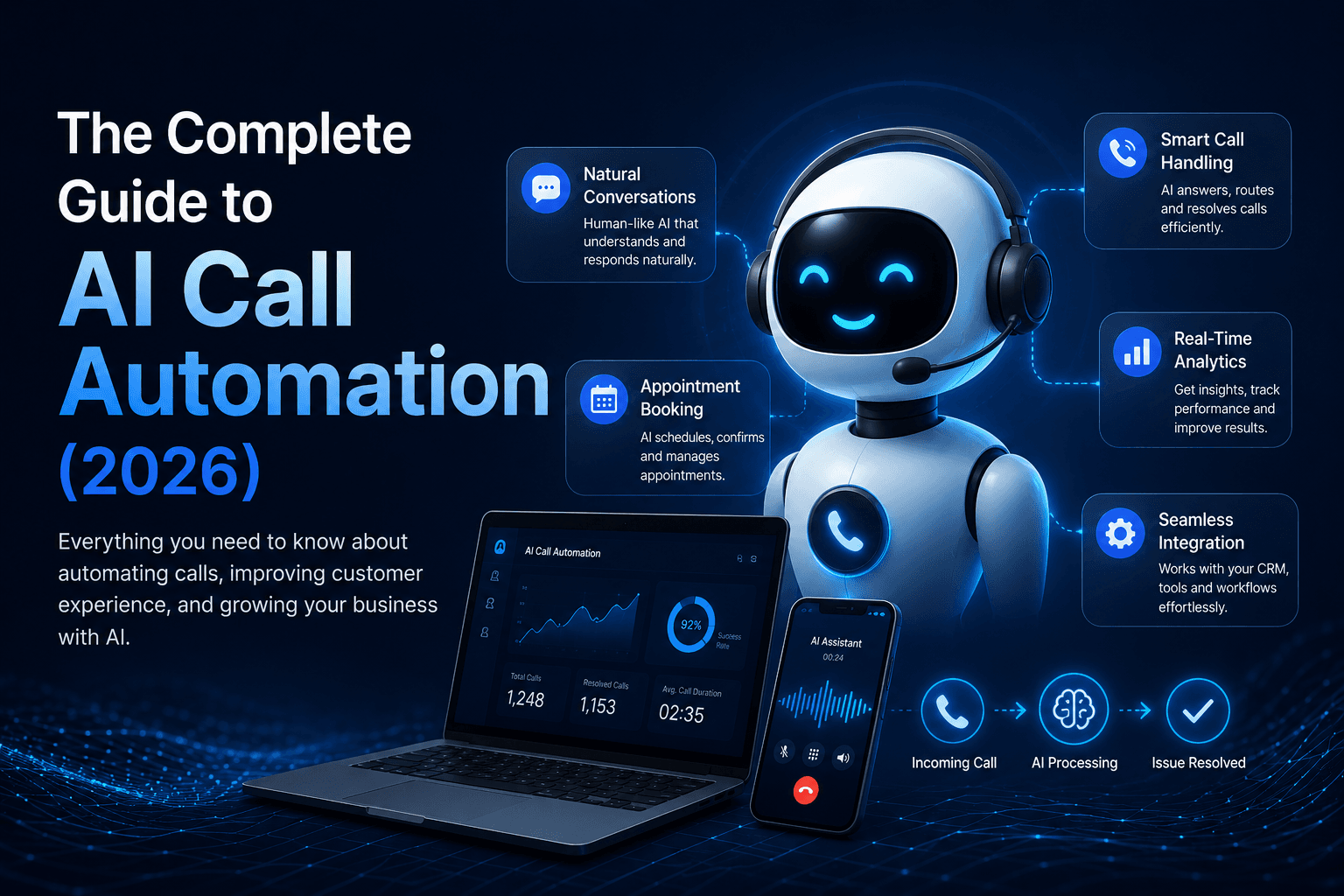
AI call automation covers a wider space than most articles admit — it's not just 'a chatbot that talks.' It spans inbound support deflection, outbound sales and collections dialing, appointment reminders, IVR replacement, and full contact-center augmentation. Each of these has a different architecture, different compliance profile, and different ROI math. I'll walk through all of them with the same rigor I'd use scoping a real client project.
This is the guide I wish existed when I started building call automation systems: a full breakdown of inbound vs outbound automation, the technology stack choices, real cost math at different volumes, compliance obligations, and the operational mistakes that turn a promising pilot into a churned customer.
Inbound automation answers calls that arrive unpredictably, with an unknown caller intent, and must resolve or route within a single conversation. Outbound automation initiates calls at scale against a known list, with a known objective (confirm, collect, survey), and carries much heavier legal obligations around consent and calling windows.
Teams that treat these as the same problem consistently under-invest in outbound compliance (TCPA in the US, TRAI regulations in India) and over-invest in inbound personalization that callers don't actually need.
| Dimension | Inbound Automation | Outbound Automation |
|---|---|---|
| Caller intent | Unknown, must classify live | Known objective per campaign |
| Primary risk | Poor containment, bad routing | Consent/compliance violations |
| Key metric | Deflection / containment rate | Contact rate, conversion, opt-out rate |
| Typical use cases | Support, reservations, reception | Reminders, collections, lead follow-up, surveys |
Regardless of inbound or outbound, the technical stack has the same five layers. What changes is the orchestration logic sitting on top.
Twilio, Telnyx, or Plivo handle PSTN connectivity — number provisioning, SIP trunking, call recording storage, and in outbound's case, dialer pacing and answering-machine detection.
LiveKit (or a managed alternative like Vapi/Retell/Bland) manages the live audio session, handles barge-in/interruptions, and coordinates the STT-LLM-TTS loop within a tight latency budget — production targets are typically under 800ms end-to-end for a natural feel.
Deepgram Nova-3 or Flux is the current default for low-latency streaming transcription; alternatives include AssemblyAI (stronger on noisy audio) and Whisper-based pipelines for batch-only use cases like post-call QA.
An LLM handles the conversation, calling structured tools for lookups and actions (check_order_status, schedule_callback, apply_discount) — the tool definitions and guardrails here are where most of the actual engineering effort should go, not prompt tuning.
ElevenLabs, Deepgram Aura-2, Cartesia, or Sarvam AI (for Indian languages) generate the spoken response. Voice consistency across a brand's calls matters more for trust than most teams initially budget for.
This is the highest-leverage decision in the whole project. A managed platform (Vapi, Bland AI, Retell) gets you live fastest but locks you into their orchestration and pricing model. A self-built LiveKit/Twilio stack gives full control and better unit economics at scale but costs real engineering weeks up front.
| Factor | Managed Platform | Self-Built (LiveKit/Twilio) |
|---|---|---|
| Time to first live call | Days | 3-8 weeks |
| Engineering effort | Low | High |
| Cost at <5,000 min/month | Usually cheaper | Usually more expensive |
| Cost at >20,000 min/month | Usually more expensive | Usually cheaper |
| Control over model/voice swaps | Limited to platform's options | Full control |
| Compliance customization | Platform-dependent | Fully custom |
Pro Tip
A good rule of thumb from real projects: prototype and pilot on a managed platform first, always. Only migrate to a self-built stack once you have real production volume data — building custom infrastructure before you know your actual call patterns is the single most common source of wasted engineering budget I see.
The true per-minute cost of a voice AI stack is almost always higher than the headline number a platform advertises, because telephony, STT, LLM, and TTS are frequently billed separately even on 'all-inclusive' platforms once you look at the fine print. Below is a realistic blended range.
| Monthly Volume | Managed Platform (all-in) | Self-Built (LiveKit stack) |
|---|---|---|
| 1,000 minutes | $70–150 | $100–180 (Ship plan floor) |
| 10,000 minutes | $700–1,500 | $500–900 |
| 50,000 minutes | $3,500–7,500 | $2,000–4,000 |
| 200,000+ minutes | Negotiated enterprise | $8,000–15,000 (often with self-hosting) |
For well-scoped, structured call types (order status, appointment booking, FAQ), 50-70% containment is realistic. For open-ended support, expect 20-40% until the system matures.
Yes, with strict disclosure and consent requirements that vary by jurisdiction — this is one of the highest-scrutiny use cases and needs dedicated legal review, not a generic compliance checklist.
Most inbound deployments show measurable labor savings within 4-8 weeks; outbound campaign ROI depends heavily on conversion rate and is usually visible within one full campaign cycle.
Call centers and business phone lines are one of the last unautomated cost centers in most companies. Humans still handle enormous volumes of repetitive, structured calls — appointment confirmations, order status checks, basic troubleshooting, lead qualification — at a fully loaded cost of $18-35/hour per agent in the US, or ₹250-450/hour in India, with turnover rates north of 30% annually in most BPOs. Meanwhile customer expectations for instant, 24/7 response keep rising.
AI call automation applies conversational voice AI to handle the structured, high-volume portion of call traffic — both inbound (support, reservations, service requests) and outbound (reminders, collections, surveys, lead follow-up) — while routing anything requiring judgment, empathy, or authority to human agents. Done correctly, it doesn't replace the contact center; it changes its shape, shifting humans toward the calls that actually need them.
Written by Akash Maurya.
Published on July 15, 2026 • Updated on July 15, 2026
Learn how AI voice agents automate business calls using modern AI tools.
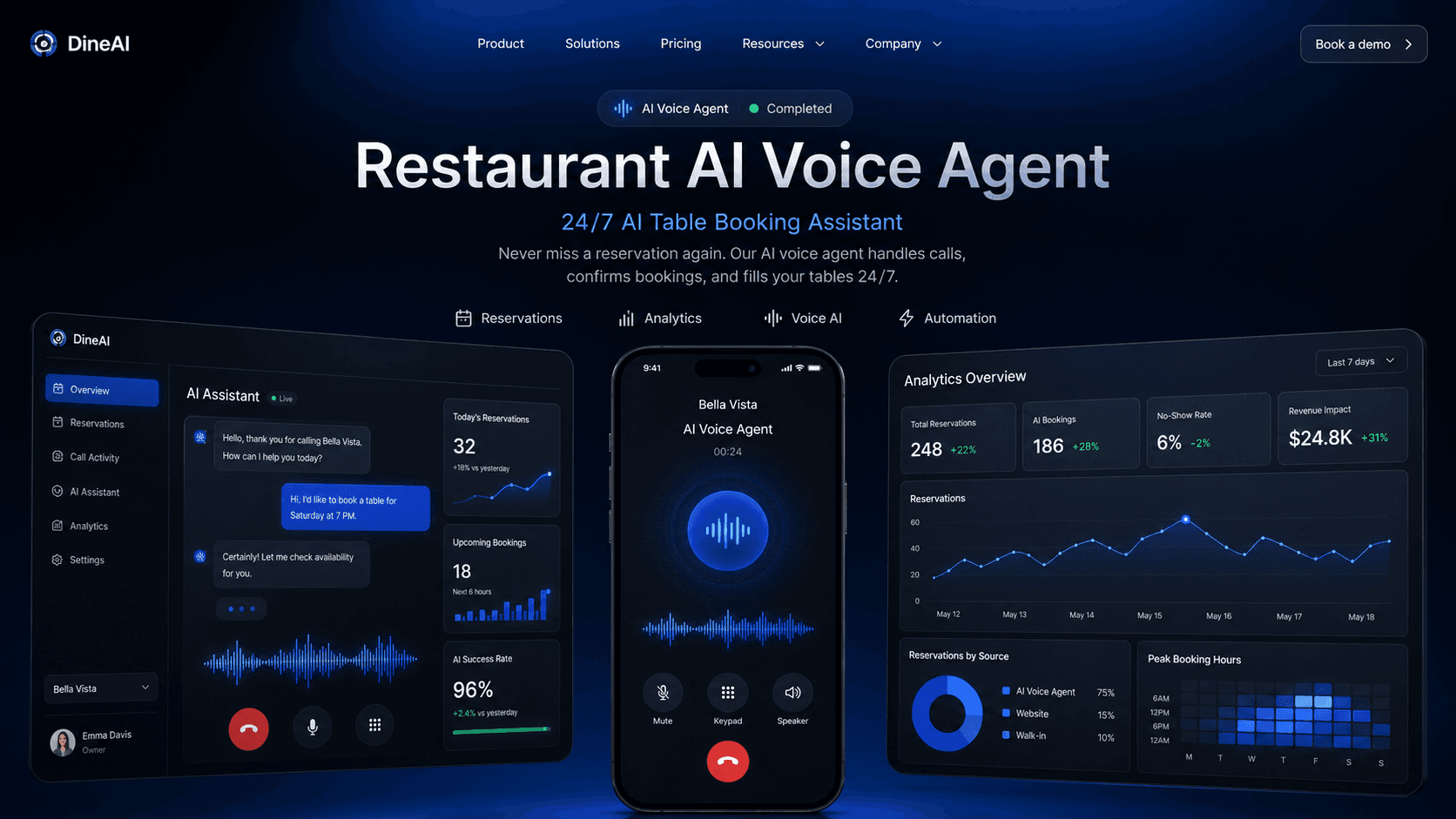
A senior engineer's field guide to deploying AI phone agents that take reservations, answer menu questions, and stop restaurants from losing money on missed calls.
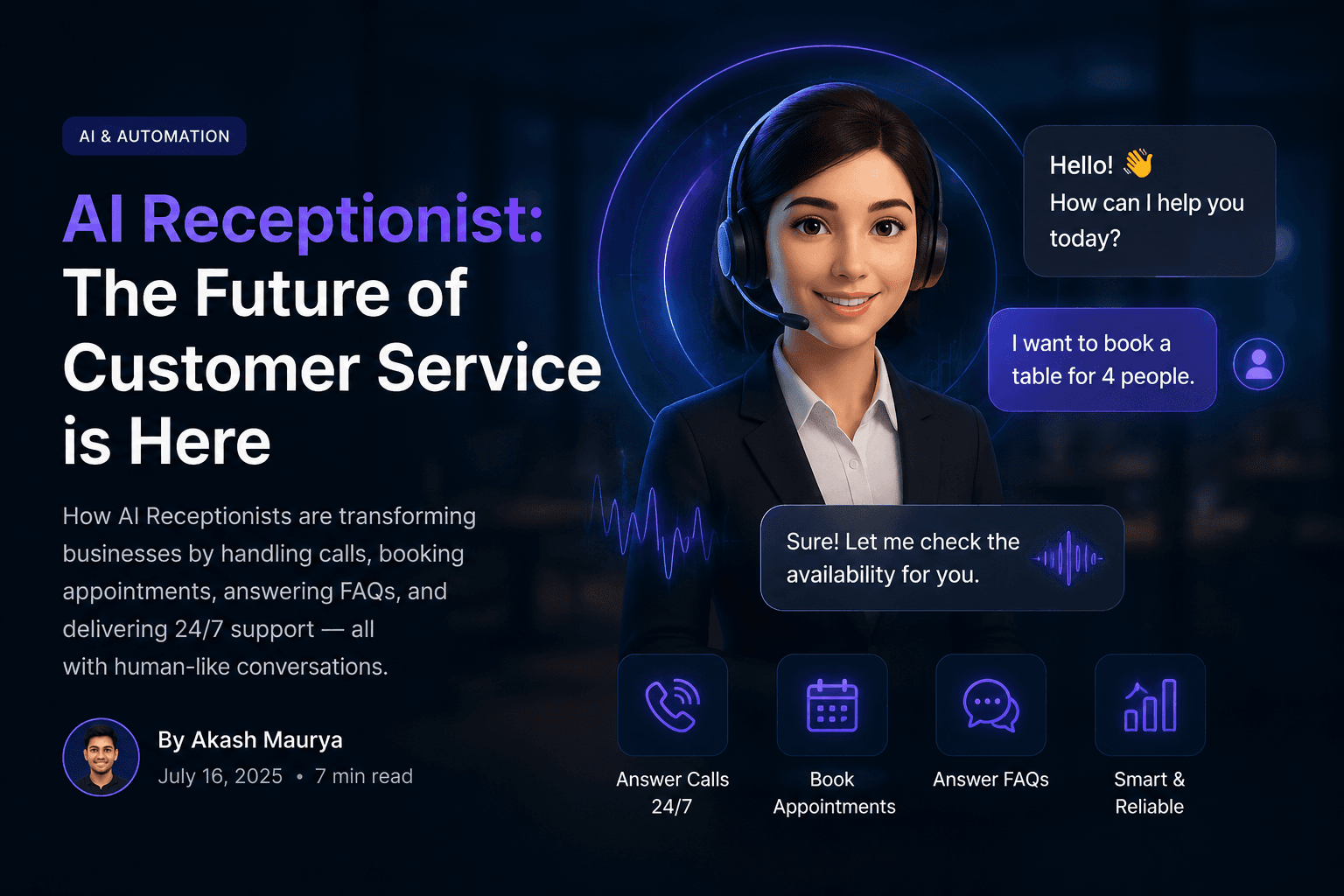
A practical look at how AI receptionists work, where they genuinely outperform humans, where they don't, and how to deploy one without breaking the guest or customer experience.
I build modern AI Voice Agents, SaaS platforms, automation systems, and full-stack applications that help businesses automate operations and improve customer experiences.