Healthcare call centers carry constraints that don't exist in most other voice AI use cases: HIPAA, insurance verification complexity, clinical triage boundaries the AI must never cross, and patient populations that skew older and less comfortable with automated systems. I've built voice automation for outpatient clinics and the lesson that matters most is this: the AI's job is scheduling logistics, never clinical judgment — and the architecture has to make that boundary impossible to cross accidentally.
This guide covers how to design, build, and deploy an AI voice agent for hospital and clinic appointment scheduling — including the compliance requirements that make healthcare voice AI meaningfully different from a restaurant or retail deployment.
The Non-Negotiable Boundary: Scheduling, Never Clinical Judgment
The single most important design decision in a healthcare voice agent is drawing a hard, explicit line between logistics and clinical content. The AI can confirm an appointment time, tell a patient to fast for 8 hours before a blood draw, or explain what documents to bring. It must never assess symptoms, suggest a diagnosis, advise on medication, or make any judgment call about urgency — those calls transfer to a nurse line or triage staff immediately, every time, with no exceptions built into the prompt.
This isn't just good practice — in most jurisdictions, an AI system offering clinical guidance without a licensed provider in the loop creates real liability exposure for the practice.
Reference Architecture for Healthcare Voice AI
1. HIPAA-compliant telephony and media layer
Every vendor in the call path — telephony (Twilio), real-time media (LiveKit Scale tier or above), STT, LLM, and TTS providers — needs a signed Business Associate Agreement (BAA) before any patient data touches the system. This is a contractual requirement, not just a technical configuration, and it's the first thing to confirm before writing any code.
2. Scheduling system integration
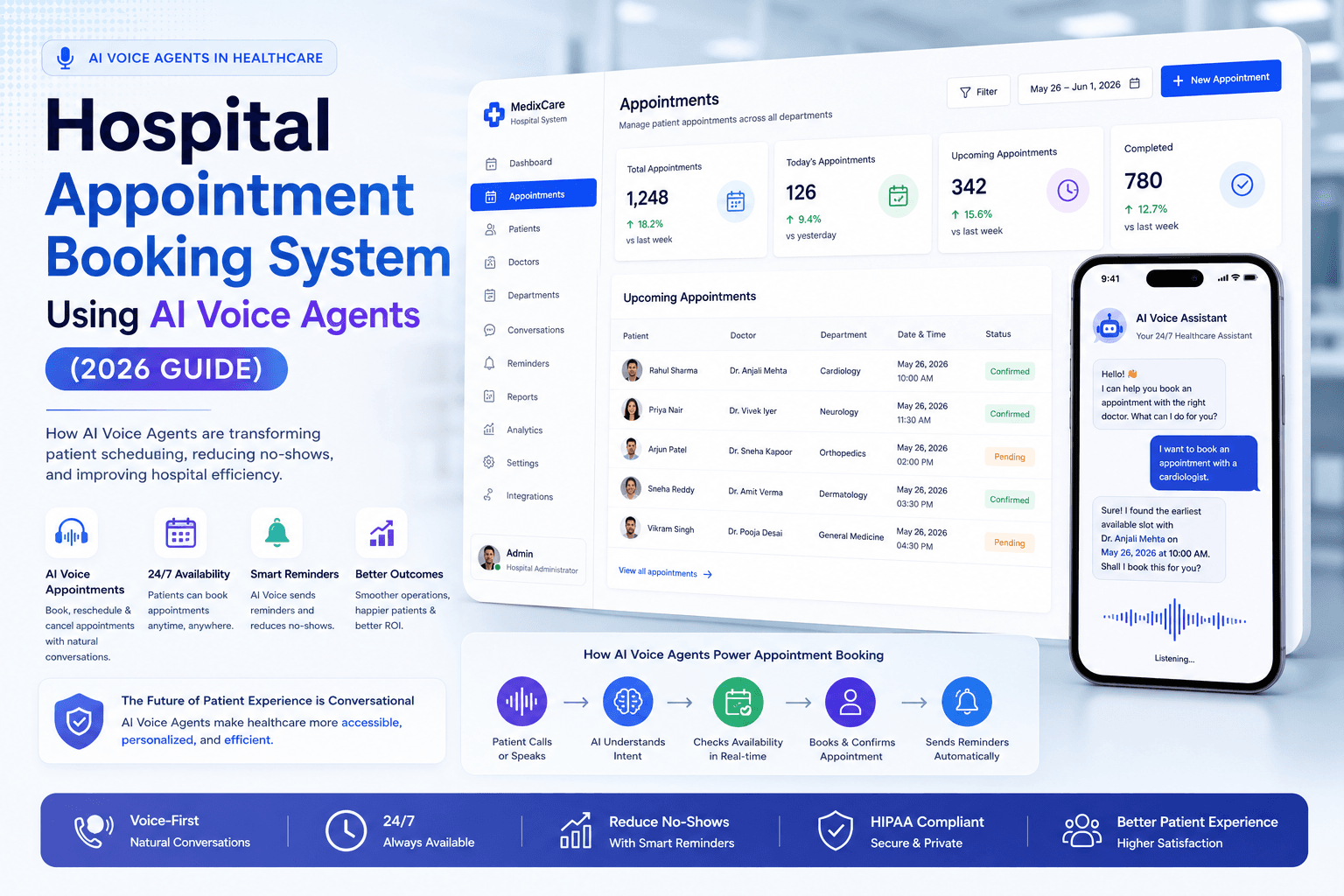
The agent needs live, real-time access to the practice's actual scheduling system (Epic, Cerner, Athenahealth, or a smaller EHR's API) — never a stale cached calendar. Double-booking or offering an already-taken slot destroys trust immediately and creates real operational problems.
3. Strict tool and topic boundaries
The LLM's available tools should be limited to scheduling actions: check_availability(), book_appointment(), reschedule_appointment(), send_pre_visit_instructions(). Any input that resembles a symptom description, medication question, or urgent concern triggers an immediate, unconditional transfer — implemented as a hard rule in the system logic, not left to the model's judgment alone.
4. Audit logging and transcript retention
Every call needs a complete, retained transcript and audit trail — both for compliance and for the (routine) process of reviewing edge cases where the AI should have escalated but didn't.
Problem
Hospital and clinic front desks are overwhelmed with scheduling calls — new appointments, reschedules, cancellations, insurance questions, and pre-visit instructions — while also managing walk-in patients and check-in. Understaffed scheduling lines mean long hold times, missed calls that translate directly into missed care (and lost revenue), and staff burnout from repetitive, low-complexity call volume that leaves less time for patients who need real help.
Solution
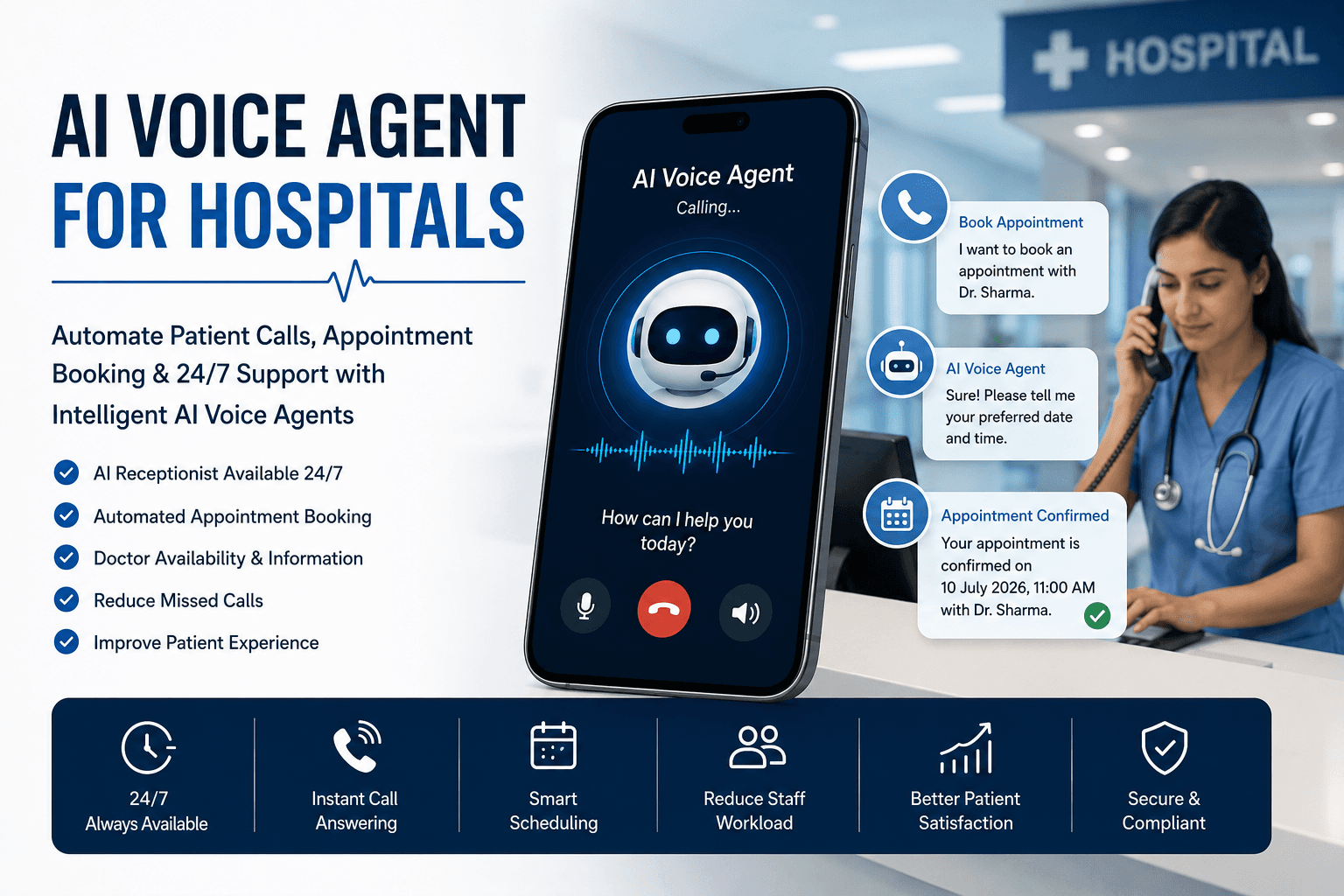
An AI voice agent handles the structured, high-volume portion of scheduling calls — booking, rescheduling, confirming, and answering logistical questions (location, what to bring, fasting instructions before a procedure) — from a verified clinical knowledge source, while immediately escalating to a human for anything resembling a clinical question, symptom description, or urgent concern.